

Over the next decade, the organizations that win in commerce will not be the ones with the largest warehouse networks. They will be the ones with the fastest access to intelligent fulfillment infrastructure. That shift is already underway.
Today’s consumers want everything, everywhere, immediately. Retailers want resilience. Brands want margin. However, the physical world – warehouses, labor, real estate, shipping trucks – was largely built for a different era and hasn’t kept pace.
As a result, leading organizations have turned to automation to help bridge the gap. While many of the world’s largest companies have already deployed physical AI in their operations, these fulfillment technologies remain out of reach for much of the market. At the same time, the operational pressures driving the shift toward automation are only intensifying. Labor shortages, rising fulfillment costs, and growing channel complexity are forcing organizations to rethink how they build and scale fulfillment operations.
The question is no longer if robotics and AI are needed to transform operations. Instead, the question is how organizations of all sizes can gain access to these technologies at the speed and scale required by today’s business needs and consumer demands.
Without automation, growing operational pressures put companies at risk of losing market share, customer loyalty and competitiveness. The next phase of warehouse automation will not be defined by better robots. It will be defined by broader access.
Evolving Access to Automation
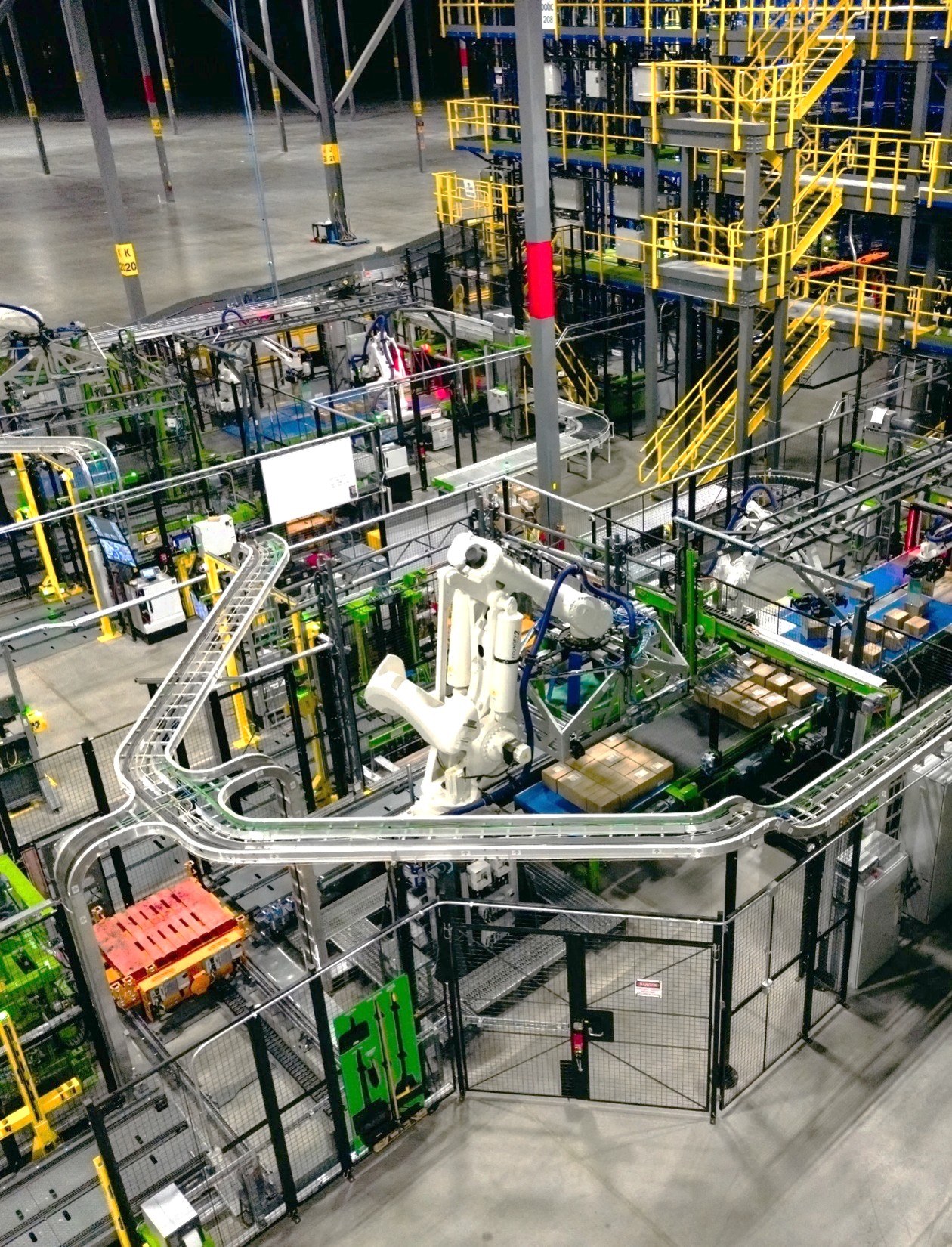
The technology itself is no longer the limiting factor. Physical AI is already operating at scale inside many of the world’s most advanced fulfillment networks. When AI and robotics manage warehouse operations, variability drops. Throughput becomes more reliable. And quality, across order accuracy, damage rates and service level agreement (SLA) compliance, improves measurably.
The challenge, however, is that building and operating automated logistics networks requires massive capital investment, deep technical expertise, and a years-long implementation process. The barrier to entry remains high for most companies.
But the model is evolving. Rather than designing, deploying, and maintaining robotic systems themselves, companies are beginning to access shared enterprise-grade automation as infrastructure. This model is levelling the playing field for companies of all sizes to compete and modernize their logistics operations.
The Cloud Computing Moment for Logistics Has Arrived
Twenty years ago, companies built and operated their own data centers because they had no alternative. Today, shared models are common and very few businesses would view owning servers as a competitive advantage. Just as cloud computing transformed access to compute infrastructure, logistics is beginning a similar transition.
As robotics, AI and warehouse automation mature, fulfillment infrastructure is becoming more accessible, flexible and scalable. Companies will increasingly access robotic capacity the same way they access cloud computing, ridesharing and transportation networks today: on demand and through shared platforms.
Companies no longer need to own all portions of warehouse automation; they can now tap into infrastructure that is already built and operational – paying for outcomes rather than assets. This model fundamentally changes how companies think about automation as businesses can now quickly access enterprise-grade fulfillment infrastructure.
Supply Chain Leaders Should Be Testing Logistics-as-a-Service Models Now
While automation has long been viewed as a technology investment, that view is beginning to shift. As fulfillment models continue to change, the companies that move the fastest won’t necessarily be the ones that build the most infrastructure themselves. They will be the ones that know how to access the right capacity, intelligence, and automation when and where they need it.
For leaders responsible for large-scale supply chain operations, this creates a practical opportunity. Having shared infrastructure gives companies a way to start with smaller commitments, test new fulfillment models, and build the operational knowledge that’s needed for larger transformation over time. That matters because the technology is moving quickly, and waiting for a perfect long-term plan may mean missing the chance to learn now.
The warehouse of the future is here today, and the time to move is now. The organizations that act early will achieve faster fulfillment, more resilient operations, and greater flexibility across channels. Those that wait may fall behind competitors operating on an entirely different cost and service model.
Dr. Ashfaque Chowdhury, CEO, Exol